Deadline Date: April 21, 2026
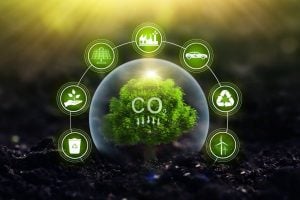
The European Commission is inviting grant applications to support innovative approaches to CO2 utilisation that reduce emissions while improving process efficiency and economic viability.
The focus areas include achieving significant reductions in production costs of CO2-based products through optimised integration of CO2 capture, purification and conversion, minimising energy consumption across the entire conversion process through advanced process integration and the use of renewable electricity and available heat sources, contributing to carbon emissions reduction through the sustainable use and valorisation of CO2 possibly aligned with CCS, expanding the portfolio of competitively producible CO2-derived products, improving process efficiency and yield by overcoming thermodynamic and equilibrium constraints, ensuring sustainability and economic viability through lifecycle and economic assessments, demonstrating scalability and cost efficiency at laboratory pilot scale, and strengthening the industrial decarbonisation technology supply chain in Europe.
The scope of this topic addresses the current limitations of CO2-based production routes, where high energy demand and thermodynamic constraints result in higher costs compared to conventional processes. By developing new integrated processes that combine CO2 capture, purification and conversion, projects are expected to reduce energy consumption and capital expenditure while improving overall process performance. Innovative process integration is expected to enable better use of electricity, available heat sources and existing infrastructures, accelerating the development of CO2 valorisation.
Proposals are expected to develop new methodologies, processes and technologies for the smart integration of CO2 capture, purification and conversion, with a strong focus on reducing energy demand and operational costs. The incorporation of renewable energy sources, including strategies to manage fluctuating energy availability, is required to enhance sustainability and cost-effectiveness. Projects should also identify and integrate available heat sources and existing infrastructures to further improve efficiency.
Addressing constraints related to CO2 conversion processes is a key component of the work, including innovative approaches to maximise yield and process efficiency and overcome low equilibrium limitations. Comprehensive lifecycle and economic assessments are required to ensure that proposed solutions are viable, sustainable and economically attractive. The conversion of CO2 to methanol and fuels is explicitly outside the scope of this topic.
Projects must showcase improved performance, scalability and cost efficiency through at least one laboratory-level pilot-scale case. The inclusion of a greenhouse gas avoidance methodology is recommended, providing detailed descriptions of baselines and projected emission reductions. Proposals should also include a business case and exploitation strategy that demonstrates how the project will contribute to boosting Europe’s industrial decarbonisation technology supply chain. Representative real industrial sites should be considered through open-loop computations alongside plant operation, supported by simulations using accurate models, with experiments involving real industrial sites encouraged. Societal and environmental impacts, as well as implications for the workplace including skills and organisational change, should be outlined.
This topic is funded under Horizon Europe Research and Innovation Actions (HORIZON-RIA), with a total indicative budget of EUR 43.8 million and an expected EU contribution of between EUR 5 million and EUR 7 million per project. Participation is open to any legal entity, regardless of place of establishment, including entities from non-associated third countries or international organisations, provided that the conditions of the Horizon Europe Regulation and the specific call are met. Legal entities must have legal personality under national, EU or international law, enabling them to exercise rights and obligations in their own name.
For more information, visit European Commission.